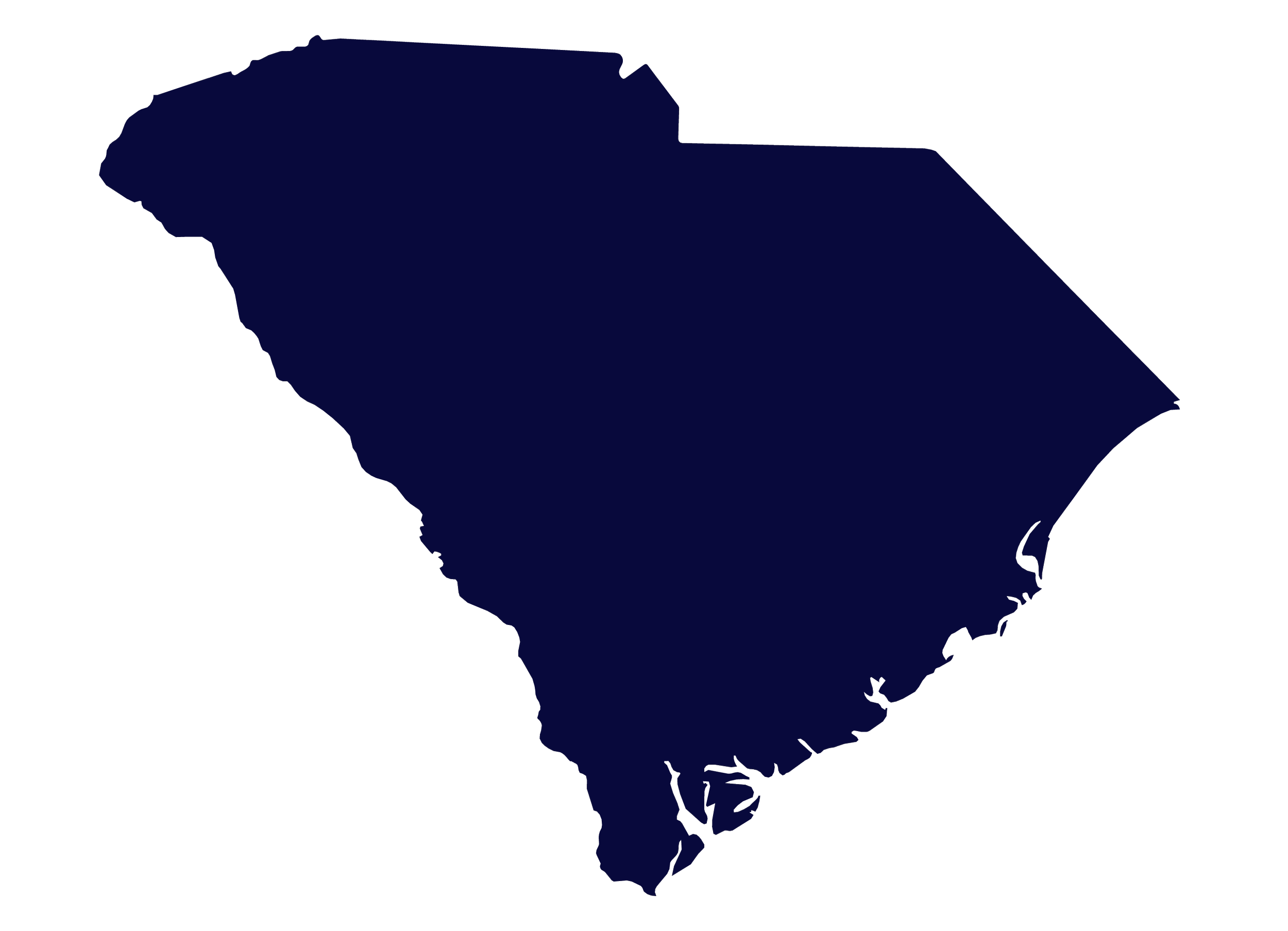
South Carolina
State Protections and Legal Framework
-
State constitutional guarantees regarding right to education
Case law and legislative history defining and interpreting the right to education
Right to education: The SC Constitution (Article XI § 3) authorizes the legislature to establish free public schools. The General Assembly “shall provide for the maintenance and support of a system of free public schools open to all children in the State and shall establish, organize and support such other public institutions of learning, as may be desirable.”
In Abbeville County School District v. State, the SC Supreme Court held that the state is constitutionally required to provide a “minimally adequate education,” affirming that lack of funding violated that obligation.
State constitutional protections regarding non-discrimination and equity
Non-discrimination provisions: SC’s constitution previously included segregation mandates (Art XI § 7), which were invalidated post‑Brown (as in Briggs v. Elliott). No statewide constitutional clause explicitly protects against discrimination within K–12 education.
Other relevant state constitutional civil rights protections
South Carolina's constitution, specifically Article I, addresses civil rights. It guarantees privileges and immunities, due process, and equal protection under the law.
-
State law equivalents to Title VI, Title IX, Section 504, and the Educational Opportunities Act (EEOA)
South Carolina law doesn't have direct, identical equivalents to Title VI, Title IX, Section 504, and the EEOA.
The South Carolina Safe School Climate Act, passed in 2006, aims to prevent and address harassment, intimidation, and bullying in public schools. It mandates that school districts develop and implement policies to prohibit these behaviors and requires school employees to report incidents. The law also encourages education for staff and parents on the issue.
Additional state civil rights protections that go beyond federal requirements (e.g., protections for LGBTQ+ students, multilingual learners, undocumented students)
Unable to find statutory protections specific to LGBTQ+ students, undocumented learners, or multilingual/migrant status beyond federal law.
However, the South Carolina legislature passed a number of bills limiting LGBTQ+ students’ rights, including transgender bathroom laws for public schools, which requires K-12 public schools to prohibit transgender students from using the restroom or locker room that aligns with their gender identity. Proviso 1.120
State law protections regarding color of law or pattern/practice liability for law enforcement in schools
SC has no state-level disparate-impact private right of action.
Anti-discrimination protections under state human rights statutes
The South Carolina Human Affairs Law (SCHAC), or the South Carolina Human Affairs Law, is a state law designed to prevent and eliminate discrimination in employment, housing, and public accommodations. It prohibits discrimination based on race, color, national origin, religion, sex, age, and disability in employment and housing, and also covers public accommodations.
South Carolina Fair Housing Law prohibits discrimination in housing based on race, color, religion, sex, national origin, physical or mental handicaps, or familial status.
The South Carolina Human Affairs Commission (SCHAC) investigates charges of discrimination
Private right of action provisions under state civil rights and human rights statutes
South Carolina state civil rights and human rights statutes do provide for private rights of action in certain circumstances, particularly in housing discrimination cases. While the South Carolina Human Affairs Law focuses on administrative remedies for employment discrimination, it allows for private lawsuits in housing discrimination cases.
Identify whether state anti-discrimination laws also prohibit discrimination caused by disparate impact. If yes, does the state law allow a private right of action for disparate impact claims?
Yes. The Human Affairs Law prohibits “an employer or other covered entity from using neutral employment policies and practices that have a disproportionately negative effect on applicants or employees of a particular race, color, religion, sex (including pregnancy, childbirth, lactation, or related medical condition), or national origin, or on an individual with a disability or class of individuals with disabilities, if the policies or practices at issue are not job-related and necessary to the operation of the business.
The Human Affairs Law also prohibits an employer from using neutral employment policies and practices that have a disproportionately negative impact on applicants or employees age 40 or older, if the policies or practices at issue are not based on a reasonable factor other than age.”
However, the state law does not explicitly provide for a private right of action for disparate impact claims.
-
Safe School Climate Act SECTION 59-63-110
Is the right provided by state law conferred on the student, parent/guardian, or both? In other words, who can bring a claim under this law?
The South Carolina Safe School Climate Act does not explicitly provide a private right of action for students or their families to sue schools for failing to address bullying or harassment.
Does the specified law or policy provide protections against retaliation? What are the elements of a retaliation claim? Are protections against retaliation clearly spelled out in the law or policy?
Statute of limitations for filing education-related state civil rights complaints (or state civil rights complaints broadly) or state human rights complaints?
180 days (300 days if dual-filed).
Are there areas where the state laws provide more protections than federal law? What are those areas?
The South Carolina law states the following: “Harassment, intimidation, or bullying means a gesture, an electronic communication, or a written, verbal, physical, or sexual act that is reasonably perceived to have the effect of:
harming a student physically or emotionally or damaging a student’s property, or placing a student in reasonable fear of personal harm or property damage; or
insulting or demeaning a student or group of students causing substantial disruption in, or substantial interference with, the orderly operation of the school."
How do I file a complaint about discrimination in a K-12 public school in South Carolina?
South Carolina Department of Education
-
Who is eligible to file (students, parents, advocates, others)?
Under the IDEA (Individuals with Disabilities Education Act), parents/guardians, students, and school districts are to work out a plan for a student’s education at IEP (Individualized Educational Program) meetings. If there is disagreement about the student’s educational plan or how it is carried out, filing a complaint with the South Carolina Department of Education (SCDE) is one option available to parents/guardians and adult students.
The South Carolina Department of Education (SCDE), pursuant to the Every Student Succeeds Act of 2015 has the authority to hear complaints and appeals regarding the federal programs administered by the Office of Federal and State Accountability.
Source: https://ed.sc.gov/policy/federal-education-programs/title-i/title-i-fiscal-compliance/title-i-complaint-procedures/ ; https://oses.ed.sc.gov/parents-family-community/dispute-resolution-information/
Are there other administrative processes someone may have to exhaust before initiating a complaint? (i.e., going through school’s, district’s, or other agency’s process first, etc.)
No.
How to initiate the process (relevant websites, standard forms, submission locations)
The complaint may be filed with the SCDE by using the SCDE’s model complaint Fact Sheet: Filing a Complaint with the SCDE form. A copy of the SCDE complaint form and instructions are available on the SCDE website at:
However, using the SCDE complaint form is not required. A letter, another complaint form, or another document may be used as long as the written correspondence contains the information required by the IDEA for filing a state complaint. Complaints and appeals must be filed with the Director of the Office of Federal and State Accountability at the S.C. Department of Education, Room A213, 849 Learning Lane, West Columbia, South Carolina 29172.
Source: Complaint Procedure
Can complaints be filed anonymously or confidentially?
No, as the individual filing the complaint must sign the complaint and include contact information where he/she/they may be reached about the complaint.
Are there language access requirements for complaint processes?
No.
Are there known barriers to accessing enforcement (filing fees, documentation requirements)?
No.
Can complainants have advocates or legal representation?
Are complainants entitled to legal representation or other advocates to file or at any point in the process?
No.
-
What are the required elements of the civil rights claim?
Complaints filed with the SCDE can raise issues about (1) an individual student’s special education services or (2) the special education system in a school district. The complaint procedure can be used to solve disagreements with local school districts over any special education matter including:
Identification (the school district has a duty to identify students who may need special education)
Evaluation (including the 60-day deadline for completing evaluations)
Educational placement (type of classroom where a student is taught)
Provision of a free appropriate public education, also known as FAPE (proper goals for each student and types of services that are provided)
Who reviews claims and what timeframes apply?
Upon receiving the complaint, the SCDE will conduct an investigation to determine the merits of the complaint. That investigation may include an on-site investigation, as determined by the SCDE.
What type of investigation may occur?
Timeline:
Notification of Receipt of Complaint - The SCDE will send a letter confirming receipt of the complaint within ten business days of receiving the complaint. This notification may also include a request for additional information from the complainant.
Final Determination - The SCDE will make a final decision regarding the complaint within 60 days, except under exceptional circumstances that warrant an extension. In such cases, the SCDE will notify the complainant that an extension of time has been issued. The Deputy Superintendent of Education will make this determination.
Who participates in investigations?
Are complainants entitled to a hearing of any kind? If yes, what are complainants entitled to during the hearing?
What privacy/confidentiality protections exist?
Are school districts required to publicly post civil rights complaint procedures?
-
What is the appeals process, if any?
Organizations and individuals may appeal the final decision of the SCDE to the Secretary of the U.S. Department of Education not later than 30 days after the SCDE resolves the complaint or resolve the complaint within a reasonable period of time. The appeal shall be accompanied by a copy of the SCDE™ resolution, and a complete statement of the reasons supporting the appeal. The Secretary shall investigate and resolve the appeal not later than 120 days after receipt of the appeal.
Are remedies legally enforceable once a violation is found?
Are there other administrative processes that must be exhausted before taking legal action?
No.
Do state agencies publish complaint outcome data?
No.
What enforcement mechanisms exist for non-compliance?
State Attorney General Enforcement Actions
-
Has the AG taken civil rights actions involving education in the past 5 years?
In July, 2025, more than half of all U.S. states, including South Carolina, filed or joined multiple lawsuits in the wake of the administration’s rewrite of federal regulations that prohibit sex-based discrimination at schools that receive federal funding.
In November, 2024, South Carolina Attorney General Alan Wilson filed a “friend of the court” brief with the U.S. Supreme Court arguing in favor of religious liberty and school choice.
What enforcement powers does the AG possess in education-related cases?
The South Carolina Attorney General, as the state's chief legal officer, has broad authority to act in education-related cases, particularly when it comes to defending state laws or challenging federal mandates that are perceived to overstep their bounds.
Does the AG accept individual education civil rights complaints, or does the office only take on broad investigations? (if they do individual complaints, would want to answer the below complaint process questions for the AG’s office)
-
Does the AG have an office/section dedicated to education or education civil rights issues? (If the AG has sections or offices dedicated to education or children's rights issues, please identify that office when responding to relevant questions above and with respect to the complaint process below.)
None.
Other State Enforcement Systems
-
NA
-
NA
-
NA